
Most of the conversation about Minnesota’s January 1, 2027 recovery residence certification deadline has focused on operators. What happens to your funding. What happens to your certification status. What happens to your business.
That is the wrong frame.
The right frame is what happens to your residents. Because the operators who miss this deadline are not the ones who suffer most. Their residents are.
Minnesota already ran this experiment once. The results were not ambiguous.
What happened in the summer of 2025
In July 2025 a new state law took effect blocking addiction treatment providers from subsidizing housing costs for people attending their outpatient programs. The policy had legitimate intent — the FBI had been investigating potential kickbacks between treatment providers and sober home operators, and the Legislature moved to close what it saw as an improper financial relationship.
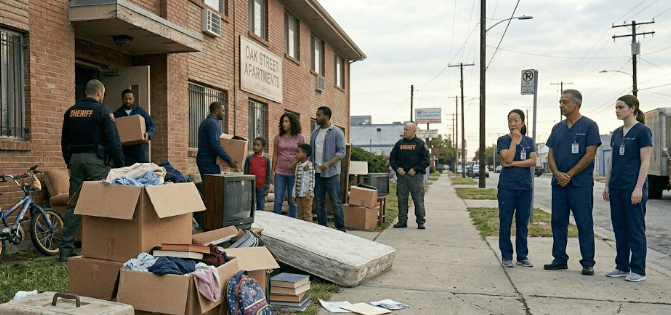
What happened next was predictable to anyone paying attention. A dozen men left a St. Paul sober home in a single week when the housing dollars they relied on came to an abrupt halt. The operator who ran that home had started it the prior year. He went from a functioning operation to two residents overnight. The men who left had nowhere to go.
Dave Sheridan, who leads the National Alliance for Recovery Residences, described the situation plainly. For a significant percentage of people in recovery, no amount of treatment will stick until they have a safe, stable place to live without the pressures that drove them to use in the first place. Stable housing is not a luxury component of recovery. It is the foundation that everything else is built on.
The 2025 displacement did not happen because operators were malicious or incompetent. It happened because a funding structure ended without a replacement structure being fully in place. Residents fell through the gap.
January 1, 2027 creates the same gap on a larger scale. The Free Standing Room and Board program — the primary funding mechanism for many operators who are not yet certified — stops reimbursing room and board services provided on or after July 1, 2027. Operators who are not certified by that date lose their billing eligibility. Residents in those homes lose their housing subsidy. The math from there is the same math as 2025.
Who your residents are and what they are carrying
The people living in your recovery residence are not there because things are going well. They are there because they are in one of the most vulnerable windows of their lives — the period immediately after treatment when relapse risk is highest, when employment is uncertain, when family relationships are often damaged, and when the structures that used to organize their days no longer exist.
Research on recovery outcomes is consistent on this point. Housing instability during early recovery dramatically increases relapse risk, emergency room utilization, and incarceration rates. The inverse is equally true — stable, accountable housing during early recovery dramatically improves long-term sobriety outcomes, employment rates, and family reunification.
Your residents are not just paying for a room. They are buying time in a structured environment that keeps them sober long enough for recovery to take root. Losing that housing mid-recovery does not just inconvenience them. For some of them it is the difference between sustained recovery and a relapse that they do not survive.
That is not hyperbole. Minnesota’s overdose mortality data and the pattern of deaths that follow displacement events make the connection direct and documented.
What displacement looks like in practice
When a recovery residence loses its funding eligibility and cannot sustain operations, the outcome for residents typically follows a predictable pattern.
Some residents have family who can take them in. That is the best case. Family reunification mid-recovery is complicated — the relationships that drove substance use often involve family dynamics — but at least there is a roof.
Some residents move to other recovery residences if beds are available. Minnesota does not have surplus capacity in certified recovery housing. The 2025 displacement crisis demonstrated exactly how thin the margin is between functional capacity and a housing emergency. When multiple operators lose certification simultaneously, the available beds do not absorb the displaced residents.
Some residents move to shelters. Emergency shelter environments are not recovery environments. They are high-stress, high-exposure settings where substances are often present and recovery structures are absent. Moving a person from a certified recovery residence to an emergency shelter mid-recovery is not a lateral move. It is a significant step backward.
Some residents return to the environments they left when they entered treatment. That outcome speaks for itself.
The timeline nobody is calculating
Here is the timeline that should concern every operator who has not started the certification process.
The DHS certification application requires a complete policy and procedure manual addressing all 21 checklist areas. Drafting that documentation from scratch takes weeks at minimum. Building the resident documentation system — intake forms, signature trails, incident reporting, grievance procedures — takes additional time to build, test, and train staff on.
Background studies through DHS NETStudy 2.0 have processing lead times. They cannot be filed the week before a certification application is submitted.
The MDH board and lodging license — required separately from DHS certification for Housing Support Program eligibility — has its own application process and inspection timeline.
DHS will have a volume of certification applications to process before January 1, 2027. Applications submitted in the fall of 2026 will be in a queue with every other operator in Minnesota who waited. Processing time is not guaranteed.
Work backward from January 1, 2027 through all of those steps. The operators who will be certified on that date started the process in the spring of 2026. That window is closing now.
The displacement risk is concentrated
Not every operator faces equal exposure here. The operators at highest risk of creating a displacement event for their residents fall into recognizable categories.
Operators who have relied entirely on the Free Standing Room and Board program and have not begun the transition to the 254B certification framework are the most exposed. Their funding cliff is July 1, 2027 and their lead time is running out.
Operators who are MASH-certified and assume that credential will carry them through the 2027 transition without additional work are the second most exposed. MASH certification does not satisfy 254B.211. The documentation infrastructure, the resident record requirements, the background studies — none of that comes with a MASH certificate. Those operators have organizational capacity and credibility. They do not have compliance infrastructure. The gap is narrower but it is real.
Operators who have the right instincts but the wrong tools — running their documentation in spreadsheets and paper files — face a process gap rather than a policy gap. They know what they need to do. They do not have a system capable of producing the evidence trail DHS will require.
In every one of these cases the operator’s gap becomes the resident’s crisis if the deadline passes without resolution.
What responsible operators are doing right now
The operators who will protect their residents through the 2027 transition are not waiting to see how the DHS Work Group recommendations land. They are not waiting for the FY2027 HSP rate to be published. They are not waiting for a final certification application form to be posted on the DHS website.
They are building their policy and procedure documentation now. They are standing up their resident management technology now. They are filing background studies now. They are scheduling their MDH board and lodging inspection now.
They are doing this not because they are afraid of DHS. They are doing it because they understand that their residents’ housing stability is directly dependent on their operational readiness. The certification deadline is not a bureaucratic event. It is the moment when every operator’s preparation — or lack of it — becomes their residents’ lived reality.
The preventable crisis
The 2025 displacement happened fast. Within 48 hours of a law taking effect, men were leaving sober homes with nowhere to go. The Legislature did not intend that outcome. The operators did not intend it. It happened because the structural gap between the old funding model and the new one was not bridged in time.
The 2027 transition was designed specifically to prevent a repeat of that event. The DHS certification framework, the direct HSP agreements, the MDH board and lodging license pathway — all of it was constructed to create a stable, sustainable funding model for recovery housing that does not depend on the improvised financial arrangements that caused the 2025 crisis.
Whether it prevents a repeat crisis or causes a larger one depends entirely on how many operators are ready on January 1, 2027.
That number is determined right now. Not next fall. Now.
If you are an operator who is not yet certain your residents will still have funded housing on January 2, 2027, that uncertainty is the most important problem in your operation. Everything else — your programming, your community, your referral relationships — depends on solving it first.
The conversation that protects your residents
Digital Matrix Group exists to close the gap between where operators are today and where 254B.211 requires them to be. We have built the full compliance infrastructure — policy and procedure documentation, resident management technology, DHS-aligned checklist coverage, AWS cloud hosting — for recovery residence operators in the Twin Cities. We build it open source, which means no vendor lock-in and no per-seat licensing fees that grow with every bed you add.
The conversation costs nothing. The cost of not having it is borne by the people living in your home.